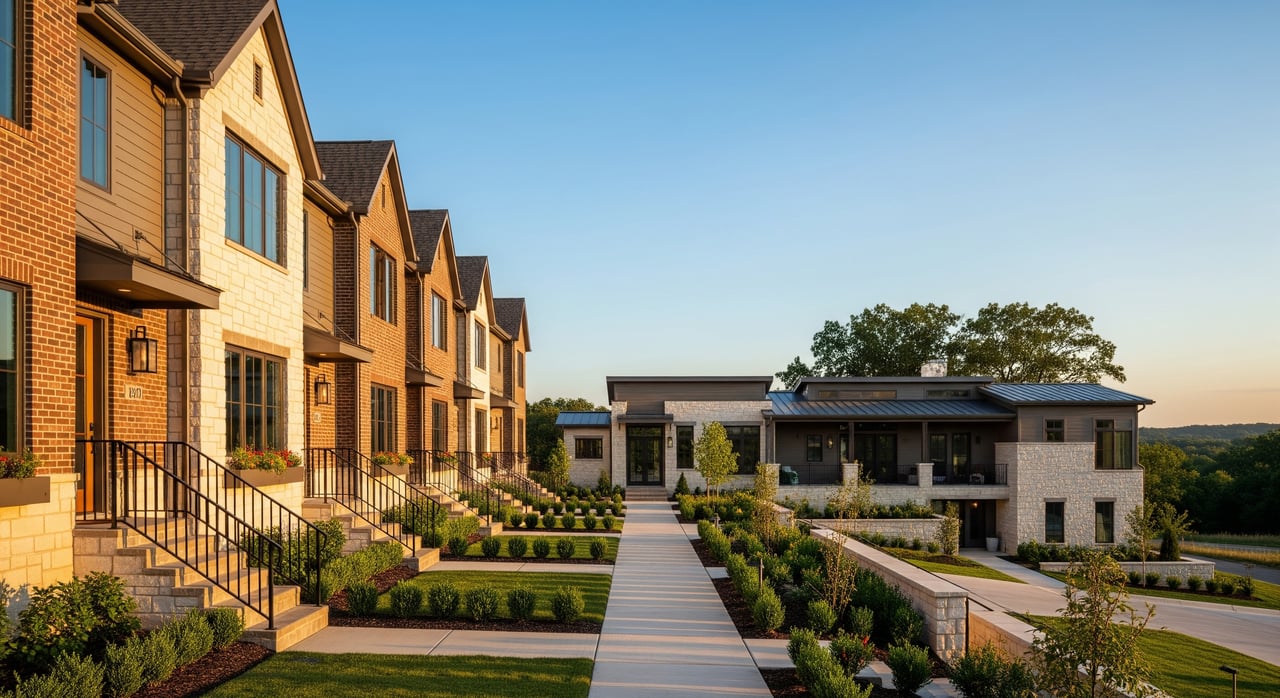
Thinking about buying in Bentonville and torn between a townhome and a detached house? You are not alone. With fast local growth, new trails, and a vibrant downtown, the right choice depends on how you want to live, what you want to maintain, and how you plan to build long-term value. In this guide, you will compare costs, lifestyle tradeoffs, and resale factors specific to Bentonville so you can move forward with clarity. Let’s dive in.
Why this choice matters in Bentonville
Bentonville keeps growing as a regional hub for employment, culture, and outdoor amenities. That growth has fueled both single-family neighborhoods on the city’s edge and higher-density options like townhomes closer to walkable hotspots. Proximity to the Historic Square, trails, and major employers shapes demand and value for each home type.
In general, townhomes concentrate near walkable, amenity-rich areas and transit corridors. Single-family homes dominate suburban neighborhoods with larger lots. Your ideal fit comes down to how you weigh commute time, outdoor space, maintenance, and long-term plans.
Quick comparison: townhome vs. house
| Factor | Townhome | Detached House |
|---|---|---|
| Typical locations | Walkable corridors near downtown, trails, and employment routes | Suburban neighborhoods and city edge, larger lots |
| Upfront price expectations | Often a lower entry point than many detached homes, especially near walkable areas | Broad range; larger lots and privacy can command a premium |
| Monthly costs | HOA dues common and cover some exterior items; predictable but adds to fixed costs | Often no HOA fee; you budget directly for yard and exterior upkeep |
| Maintenance | Reduced exterior/yard work; HOA rules limit changes | Full control of exterior and landscaping; higher time and cost to maintain |
| Privacy and noise | Shared walls and closer spacing can raise noise/privacy considerations | Detached structure and setbacks improve privacy |
| Space and flexibility | Efficient, often multi-story layouts; limited exterior changes | More indoor/outdoor space; easier to add features subject to zoning |
| Commute and walkability | Usually closer to downtown amenities; less driving | Often longer commutes but quieter streets and larger yards |
| Utilities | Smaller footprint and shared walls can lower energy use | Larger interiors and yards can raise utility and water costs |
| Resale and appreciation | Strong in amenity-rich spots; sensitive to HOA health and fees | Broad buyer pool; lot and privacy often retain a premium |
| Rental considerations | Some HOAs limit rentals; check rules early | Fewer HOA restrictions in many areas; confirm local rules |
Understand total cost of ownership
A smart way to compare is to build a 5- or 10-year total cost of ownership model. You want to estimate both monthly cash flow and what your net proceeds could look like when you sell.
Include these categories:
- Purchase price and your loan terms.
- Property taxes, homeowner’s insurance, and mortgage interest.
- HOA dues if applicable.
- Utilities: energy, water/sewer, trash.
- Maintenance and repair reserve: roof, HVAC, landscaping, exterior surfaces.
- Transaction costs: closing at purchase, and selling costs when you exit.
- Appreciation scenarios: conservative, base, and optimistic.
Keep the assumptions simple and consistent so you can compare options side by side.
HOA and maintenance in Bentonville
Townhomes often shift roof, siding, and common-area landscaping to the HOA, which you then pay for through monthly dues. This makes budgeting predictable but adds a fixed cost that can rise over time. In detached homes, you control the work and timing, but you shoulder the effort and expense of exterior care. Some single-family neighborhoods have HOAs too, so be sure to verify rules and fees.
Taxes, insurance, and utilities
Property taxes and homeowner’s insurance scale with assessed value and replacement costs. In general, a lower purchase price can mean lower taxes and insurance. For tax details, check with the Benton County Assessor to understand assessment methods and current millage. Utilities often run lower in a townhome due to smaller square footage and shared walls. Detached homes may have higher water use for yards and larger spaces to heat and cool.
Lifestyle tradeoffs you will feel
Maintenance and convenience
- Townhome advantages: reduced yard work, exterior care often handled, and strong proximity to trails and downtown.
- Townhome considerations: monthly HOA dues and possible special assessments; exterior changes governed by rules.
- Detached advantages: full control over the property, room for gardens and projects, and the ability to tailor outdoor space.
- Detached considerations: more time and budget for roof, yard, and driveway upkeep.
Privacy and noise
Townhomes can share walls and may sit closer together. Build quality and design matter a lot. Detached homes offer better acoustic and visual privacy thanks to separation and lot size.
Space and adaptability
Townhomes are efficient and often multi-story, which works well if you want separate rooms with less upkeep. Detached homes offer larger lots and more flexibility for additions, accessory structures, or outdoor living, subject to zoning and neighborhood rules.
Appreciation and resale outlook
In Bentonville, micro-location drives performance. Homes near the Historic Square, cultural sites, major employers, and the trail network often remain in high demand. Townhomes in these amenity-rich areas can appreciate well. They are, however, more sensitive to HOA health and fee changes. Detached homes typically draw a wider buyer pool and can retain a premium for lot and privacy. Both segments are rate-sensitive, and shifts in regional employment or new construction can affect appreciation.
Where each option is common in Bentonville
- Downtown and the Arts & Trails Corridor: Higher concentration of townhomes and some walkable single-family homes. Great for buyers who value walkability and lifestyle.
- Employment corridors and near corporate campuses: Mix of townhomes and single-family homes, popular with commuters.
- Suburban neighborhoods toward the city edge: Primarily detached homes with larger lots and newer subdivision styles.
- Transitional corridors and infill sites: Clusters of new townhomes and attached housing.
Which fits your life? A quick guide
- Downsizers and empty nesters: A townhome’s lower maintenance and proximity to amenities often fits well. Confirm parking, storage, and accessibility.
- Young professionals and relocators: Townhomes or smaller detached homes near commute routes can minimize drive time and maximize lifestyle.
- Growing families: Detached homes offer yards, privacy, and room to expand. Proximity to schools and parks often guides the search.
- Investors: Check HOA rental rules and focus on micro-locations with steady demand. Compare long-term total cost and likely rent levels.
Two real-world scenarios
Walkable townhome near downtown
You want weekend access to the Square, restaurants, and the trail system. A townhome shortens your commute and reduces yard work. You add HOA dues to your budget, but exterior upkeep is largely handled. Utilities trend lower due to shared walls and efficient layouts. Your main homework is reviewing HOA rules, financials, and any rental limits.
Suburban four-bedroom detached home
You want a yard for gatherings and space for hobbies. You budget for lawn care, occasional exterior work, and larger utility bills. There is likely no monthly HOA fee, though some neighborhoods have one. You get more privacy and flexibility for projects, with resale demand supported by the broader buyer pool for detached homes.
How to run your numbers in 30 minutes
- Set your time horizon: 5 or 10 years, plus a conservative, base, and optimistic resale scenario.
- Gather inputs: HOA dues, recent property tax amounts, typical insurance, and utilities for each option.
- Build a simple spreadsheet: monthly cash flow and an annual total cost of ownership.
- Add selling costs and estimate net proceeds after your time horizon.
- Stress test: vary interest rates and appreciation to see your range of outcomes.
- Review HOA documents, rules, and reserve health for any townhome communities.
- Check with a local lender about financing for attached homes and any HOA requirements.
Next steps and how we help
Choosing between a townhome and a detached house in Bentonville comes down to lifestyle and long-term planning. If you want less maintenance and more walkability, a townhome near the trail network or the Square might be a great fit. If you want space, privacy, and room to customize, a detached home in a suburban neighborhood can deliver.
You do not have to figure it out alone. We combine hyperlocal insight with organized, compassionate guidance to help you compare options, model costs, and find a community that fits. When you are ready to plan your move, connect with Julie Wolfe. Let’s make your decision simple and confident.
FAQs
What costs differ most between Bentonville townhomes and houses?
- Townhomes often include HOA dues that cover some exterior upkeep. Detached homes usually skip the monthly HOA but add out-of-pocket yard and exterior costs.
Will a townhome appreciate as well as a detached house in Bentonville?
- It depends on micro-location, supply, and demand. Amenity-rich, walkable areas can support strong townhome appreciation, while detached homes often retain a premium for lot and privacy.
Are townhomes a good fit for Bentonville downsizers?
- Yes. Lower exterior maintenance and proximity to downtown amenities make townhomes attractive. Confirm HOA rules, parking, and accessibility features.
How do taxes and insurance compare for townhomes and houses in Bentonville?
- Both follow assessed value and replacement costs. Lower purchase prices typically mean lower taxes and insurance. Check with the Benton County Assessor for assessment details.
Are there financing differences for attached homes in Bentonville?
- Lenders may review HOA financials and rules for attached housing. It is wise to confirm underwriting requirements with a local lender early in the process.